What is perception, and what is a perceptual set?
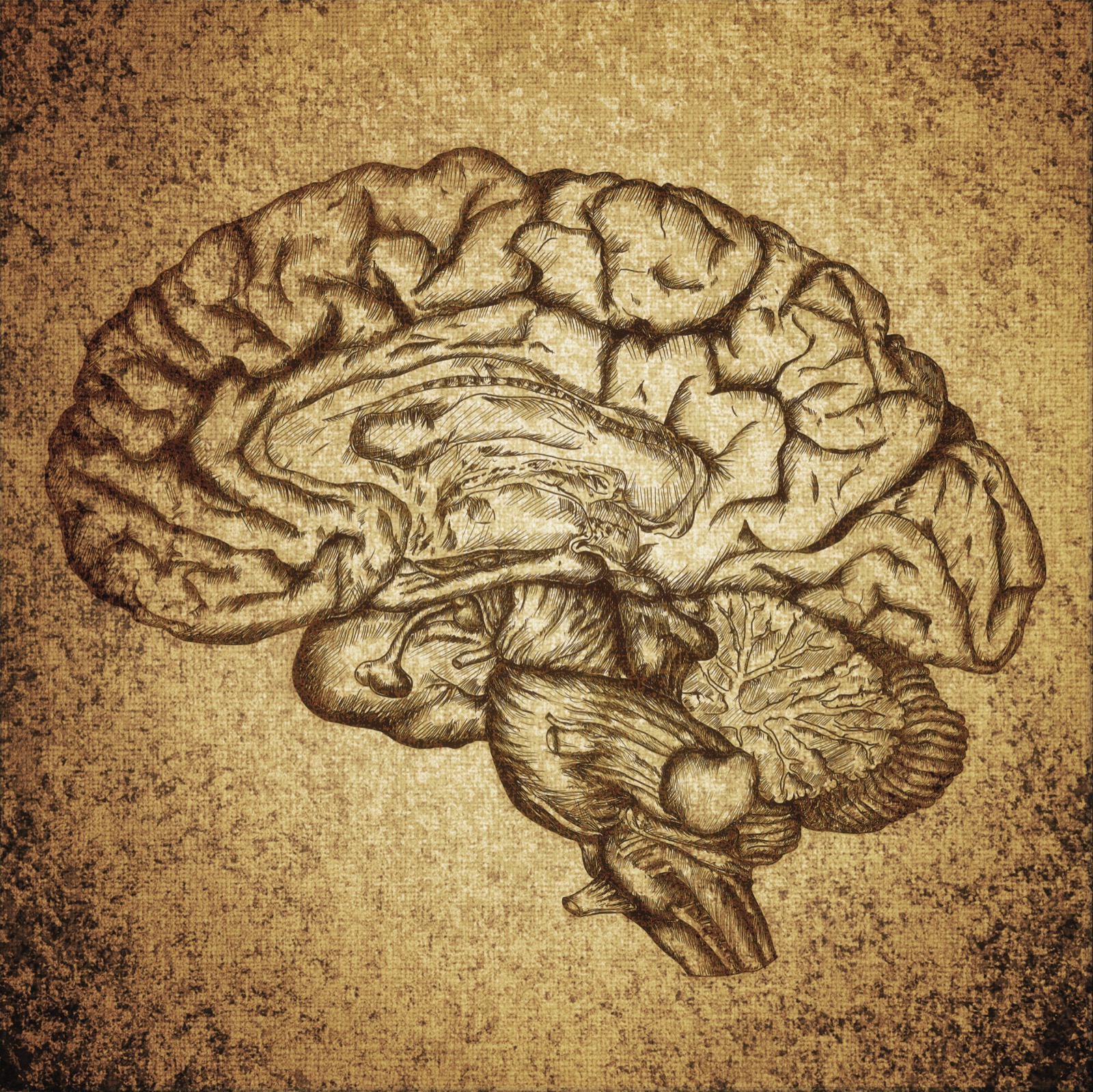
Perception is the ability to become aware of something, real or illusory, through the senses. A perceptual set is a predisposition to perceive in a particular way, an individual lens on incoming information (Allport, 1955). It works by selectively priming the sensory system to expect a certain result, usually in the service of a goal or of language. In daily life we combine the judgments of our senses into one conclusion about the present moment. As we do, some ideas become biased toward what we assume we should perceive, and those assumptions reflect our personality and environment.
Lateral, inferior and orbital prefrontal cortex help select relevant information while other regions suppress what seems irrelevant (Desimone & Duncan, 1995). Working together, these mechanisms tune the perceptual set toward an expected stimulus. Goldberg, Perfetti and Schneider (2006) used functional neuroimaging to ask what sensory regions do when we retrieve perceptual knowledge. Judging tactile, taste, sound or visual properties of objects activated the brain regions that encode those same senses, so sensory cortex takes part in knowledge retrieval, not only in perception itself. Neuroimaging and computational modeling remain the main ways to test how perception works. Expectation shapes both what we perceive and how we respond to it (Bari & Robbins, 2013).
Behavior is where perceptual sets become visible. Bari and Robbins (2013) reviewed goal-directed behavior and the brain's ability to inhibit it: putting the brakes on impulsive or unnecessary responses. This response control depends on what we judge appropriate in a given context.
Three kinds of perception
Spatial perception
The clock-drawing test (see Illustrations) screens for spatial neglect after brain injury or lesions. It has good test–retest reliability, including in people with dementia (Pinto & Peters, 2009).
Visual perception
Seeing is interpretation as well as data. We can tell when an object is different or exaggerated compared with another. Jardine, Ondov, Elmqvist and Franconeri (2020) found evidence that visual comparison relies on "perceptual proxies" such as mean length and border area, rather than on the full data. Their work links the mechanisms of perception to how we read charts and compare values.
Physical perception
Physical perception involves bodily and mental responses as much as interpretation. Chapman and colleagues (2019) tracked perceived exertion and muscle activity during continuous bench-press sets and showed that these responses track mechanical changes, such as the drop in lifting velocity, as a set approaches failure.
Why reflect on our own perception?
Perceptual sets work in two main ways: through expectations that focus attention on particular aspects of the input, and through knowing how to classify, name and draw inferences from what we select (McLeod, n.d.). Allport (1955) described six motivational and emotional influences on perception:
- physiological needs
- reward and punishment
- emotional connotation
- individual values
- personality
- the value of objects
Perceptual grouping lets us organize and tell things apart. Even in black and white, a basketball and a football are easy to distinguish; a basketball and a soccer ball are harder. Vickery (2008) ran a series of experiments showing that grouping can be induced, for example by having people find repeated shapes in a target row, and that induced grouping shapes what we perceive.
Neglect is a loss of awareness of one side of space, usually after a lesion such as a stroke. People may fail to notice positions, objects or faces on that side. The clock-drawing test shows neglect of a whole spatial field clearly, but it is less sensitive to the attention problems that often accompany stroke (Mark, 2003).
Body-focused conditions such as dermatillomania (chronic skin picking) and body dysmorphic disorder show how perception of the self can affect the body. Both are often worsened by coping with negative emotions such as anxiety or depression. Body dysmorphic disorder involves being unable to stop noticing and judging perceived flaws; in dermatillomania, a person's perception in the moment can mask the harm being done. Recovery is not as simple as "change how you think." The point is that earlier ways of thinking shape how we think and feel now, which is exactly what a perceptual set is.
Discrimination, meaning prejudicial treatment of a group of people, is a perceptual set at the level of society. Like other perceptual habits it is often learned from the environment: preconceived ideas, factual or not, are passed from one person to another, much as table manners pass from parent to child. However it is learned, discrimination reflects a person's current perception.
Illusions show that our perceptual sets, though mostly involuntary, shape conversation, feeling, movement and vision. Errors in everyday perception make the same point (Ziemer et al., 2013). An illusion takes our expectations about a stimulus and challenges them just enough that perception changes or "breaks" (Lyakhovetskii & Karpinskaia, 2017). Many illusions exploit perceptual grouping to produce two possible images. Zupan and Watson (2020) asked whether illusory groups affect how we prioritize new items and found that grouping constrains this kind of time-based selection, so complex scenes that demand grouping can limit other visual abilities.
The future
Studying perceptual sets gives a more organized picture of perception and better computational predictions of it. Rosedahl and Ashby (2019) used a model of procedural learning to predict how difficult people will find perceptual category-learning tasks. Understanding where perception errs, and how to reduce those errors (Gorbunova, 2016), feeds future computational neuroscience and brain mapping, and our understanding of behavior as a whole.
Sources: References. More neuroscience and psychology: NeuroStars.
References
Adamo, S. H., Gereke, B. J., Shomstein, S., & Schmidt, J. (2021). From “satisfaction of search” to “subsequent search misses”: A review of multiple-target search errors across radiology and cognitive science. Cognitive Research: Principles and Implications, 6, 59. https://doi.org/10.1186/s41235-021-00318-w
Allport, F. H. (1955). Theories of perception and the concept of structure. Wiley.
Bari, A., & Robbins, T. W. (2013). Inhibition and impulsivity: Behavioral and neural basis of response control. Progress in Neurobiology, 108, 44–79. https://doi.org/10.1016/j.pneurobio.2013.06.005
Chapman, M., Larumbe-Zabala, E., Goss-Sampson, M., Triplett, N. T., & Naclerio, F. (2019). Using perceptual and neuromuscular responses to estimate mechanical changes during continuous sets in the bench press. Journal of Strength and Conditioning Research, 33(10), 2722–2732. https://doi.org/10.1519/JSC.0000000000002516
Dentico, D., Cheung, B. L., Chang, J. Y., Guokas, J., Boly, M., Tononi, G., & Van Veen, B. (2014). Reversal of cortical information flow during visual imagery as compared to visual perception. NeuroImage, 100, 237–243. https://doi.org/10.1016/j.neuroimage.2014.05.081
Desimone, R., & Duncan, J. (1995). Neural mechanisms of selective visual attention. Annual Review of Neuroscience, 18, 193–222. https://doi.org/10.1146/annurev.ne.18.030195.001205
Goldberg, R. F., Perfetti, C. A., & Schneider, W. (2006). Perceptual knowledge retrieval activates sensory brain regions. Journal of Neuroscience, 26(18), 4917–4921. https://doi.org/10.1523/JNEUROSCI.5389-05.2006
Gorbunova, E. (2016). The role of perceptual similarity in visual search for multiple targets. Journal of Vision. https://jov.arvojournals.org/article.aspx?articleid=2550000
Jardine, N., Ondov, B. D., Elmqvist, N., & Franconeri, S. (2020). The perceptual proxies of visual comparison. IEEE Transactions on Visualization and Computer Graphics, 26(1), 1012–1021. https://doi.org/10.1109/TVCG.2019.2934786
Lyakhovetskii, V., & Karpinskaia, V. (2017). The aftereffects of Müller-Lyer and Ponzo illusions: Differences revealed in sensorimotor domain. Proceedings of the Latvian Academy of Sciences, Section B, 71(5), 352–358. https://doi.org/10.1515/prolas-2017-0060
Mark, V. W. (2003). Acute versus chronic functional aspects of unilateral spatial neglect. Frontiers in Bioscience, 8(5). https://doi.org/10.2741/973
McLeod, S. (n.d.). Perceptual set in psychology. Simply Psychology. https://www.simplypsychology.org/perceptual-set.html
Pinto, E., & Peters, R. (2009). Literature review of the clock drawing test as a tool for cognitive screening. Dementia and Geriatric Cognitive Disorders, 27(3), 201–213. https://doi.org/10.1159/000203344
Rosedahl, L. A., & Ashby, F. G. (2019). A difficulty predictor for perceptual category learning. Journal of Vision, 19(6), 20. https://doi.org/10.1167/19.6.20
Vickery, T. J. (2008). Induced perceptual grouping. Psychological Science, 19(7), 693–701. https://doi.org/10.1111/j.1467-9280.2008.02144.x
Ziemer, C. J., Branson, M. J., Chihak, B. J., Kearney, J. K., Cremer, J. F., & Plumert, J. M. (2013). Manipulating perception versus action in recalibration tasks. Attention, Perception, & Psychophysics, 75(6), 1260–1274. https://doi.org/10.3758/s13414-013-0473-6
Zupan, Z., & Watson, D. G. (2020). Perceptual grouping constrains inhibition in time-based visual selection. Attention, Perception, & Psychophysics, 82(2), 500–517. https://doi.org/10.3758/s13414-019-01892-4